Market Note: Pricing Structure and Export Competitiveness
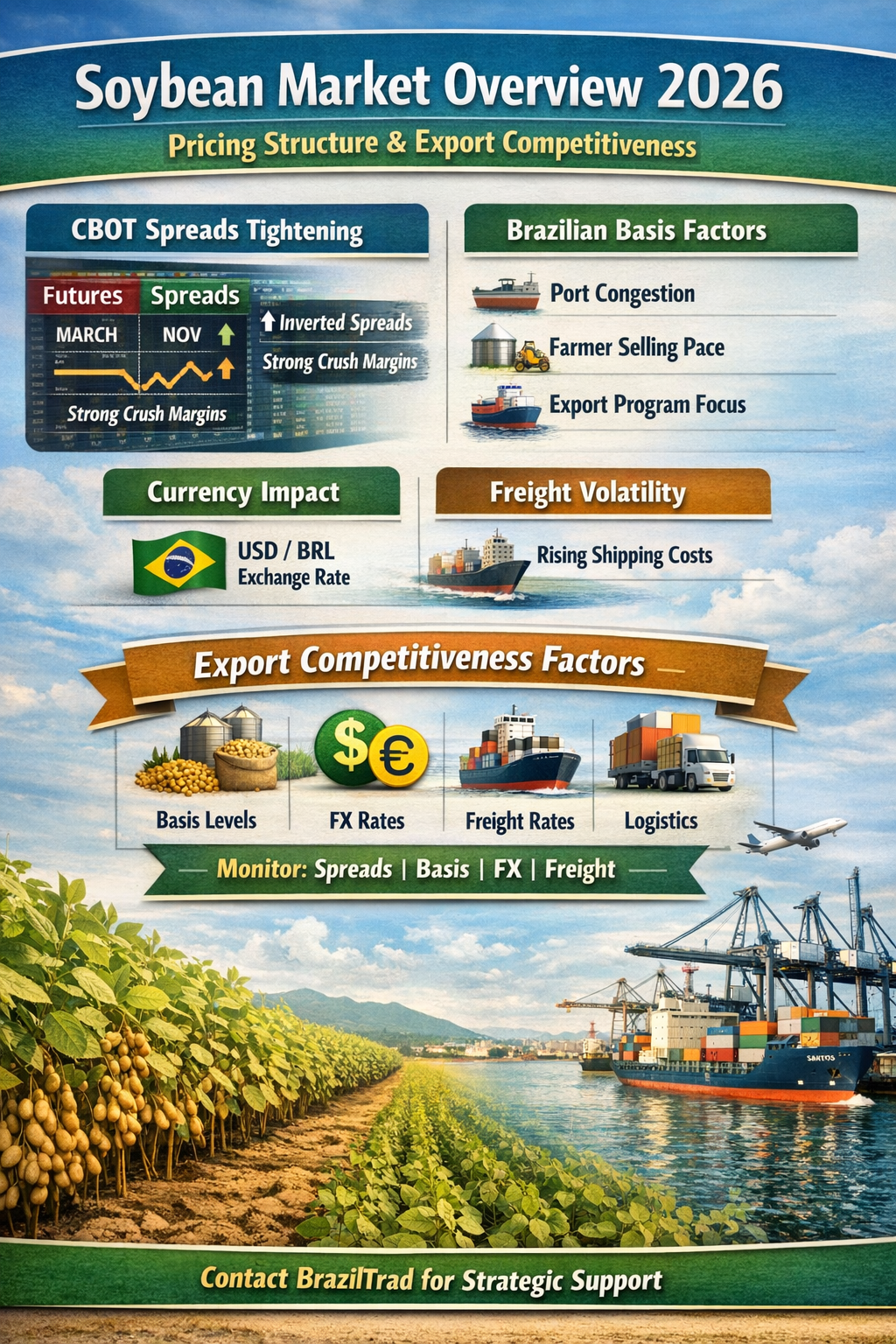
Summary: Soybean markets in early 2026 are being driven less by outright futures direction and more by structural components — CBOT spreads, Brazilian basis levels, currency movements and freight volatility. Export competitiveness now depends on execution efficiency as much as flat price.
CBOT Structure: Spreads Matter
While front-month contracts show moderate volatility, calendar spreads are signaling tighter nearby supply conditions. Inverted or firm spreads tend to support basis strengthening at origin.
- Nearby demand: Stronger crush margins may support short-term contracts.
- Spread behavior: Tight spreads can amplify basis reactions.
Brazilian Basis Dynamics
Origin premiums (basis) in Brazil remain sensitive to:
- Port lineups and vessel availability
- Farmer selling pace
- Export program concentration
Any compression in farmer selling or port congestion can tighten basis levels even if CBOT remains stable.
FX and Freight as Key Variables
USD/BRL remains a central competitiveness factor. A stronger BRL reduces exporter margins unless offset by higher basis or CBOT strength.
Freight rates, particularly on Atlantic routes, have shown episodic volatility. Bunker costs and vessel supply continue to influence CIF pricing structures.
Bias and Watchlist
Bias: Structurally supportive if spreads remain firm and basis tightens. Neutral-to-bearish risk if farmer selling accelerates and freight eases.
Monitor:
- CBOT calendar spreads
- FOB Santos basis levels
- USD/BRL exchange rate
- Atlantic freight benchmarks
Strategic Note: In 2026, margin management requires coordinated monitoring of futures, basis, FX and logistics — not flat price alone.
Need support structuring soybean export operations?
Contact BrazilTrad.