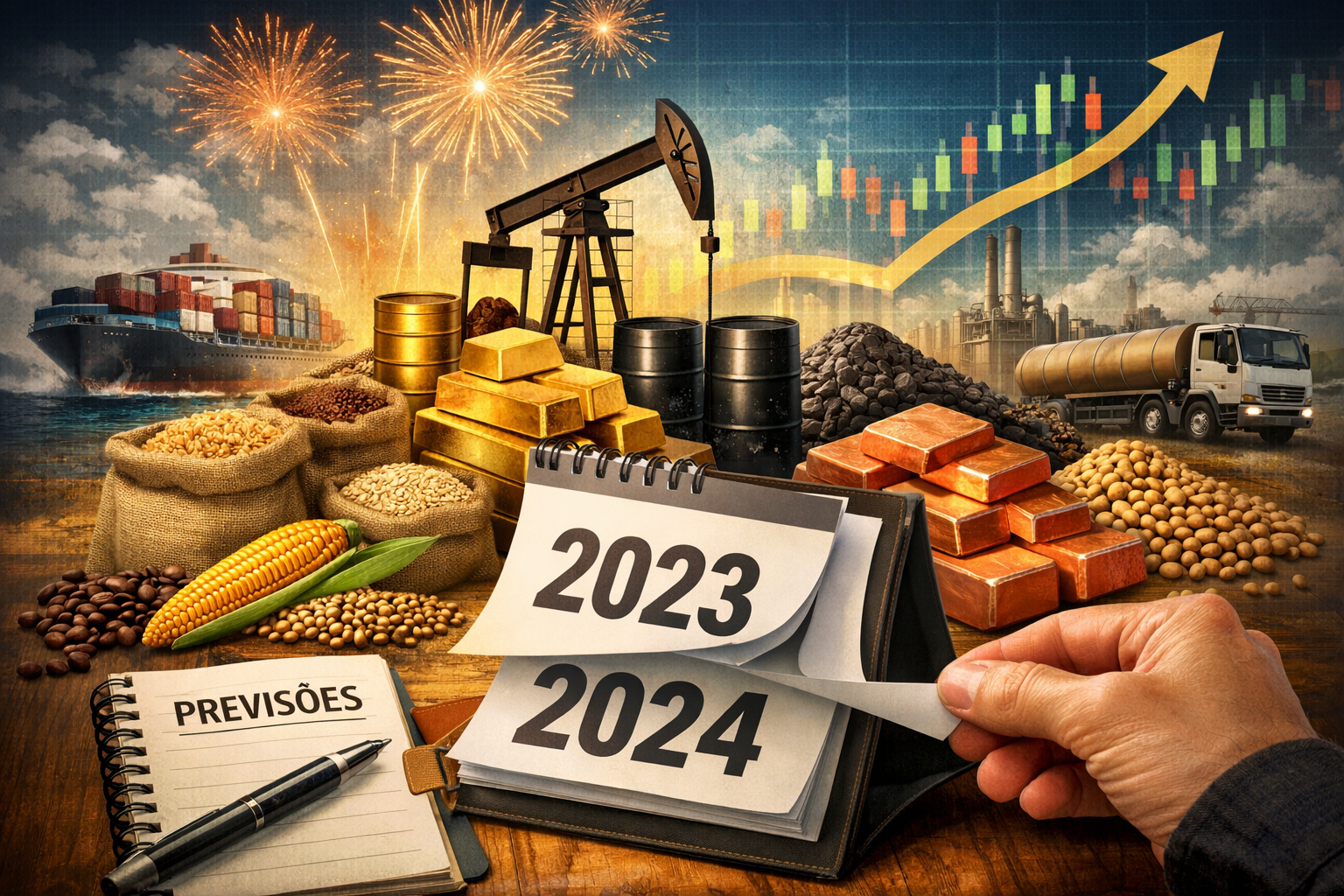
 Commodities market enters year-end preparation phase
As the calendar approaches its close, the global commodities market moves into a strategic period of review and repositioning. Producers, trading companies, importers, and financial institutions use the final weeks of the year to reassess contracts, adjust inventories, and redefine priorities amid an international landscape shaped by volatility, geopolitical shifts, and evolving regulatory demands.
In the agricultural sector, attention is focused on planning the next harvest and managing risk. Key crops such as soybeans, corn, and wheat end the year with heightened sensitivity to weather conditions in the Southern Hemisphere—particularly in Brazil and Argentina—while Asian demand, led by China, remains a decisive factor in price formation. Market participants are also revisiting hedging strategies in response to currency fluctuations and the cost of international financing.
For energy commodities, the year-end period is marked by assessments of production levels, strategic inventories, and supply decisions by major producers. Oil and natural gas head into the new year influenced by supply agreements, geopolitical tensions, and the ongoing energy transition, which is gradually reshaping investment and consumption patterns. Companies across the sector are adjusting long-term contracts and revising demand outlooks, especially in Europe and Asia.
In the metals segment, including iron ore, copper, and aluminum, preparation centers on evaluating the pace of global industrial activity and investments in infrastructure and clean energy. Expectations around new projects and industrial policies in major economies keep markets alert, while logistical challenges and production costs remain firmly on the radar.
Beyond traditional fundamentals, the end of the year is also a critical moment for alignment with ESG criteria, compliance, and governance standards. International buyers increasingly demand traceability, transparency, and operational predictability, prompting exporting companies to strengthen internal processes ahead of the new commercial cycle.
As a result, the commodities market enters the new year not just with updated figures, but with more refined strategies. The groundwork laid now is likely to be decisive for those seeking competitiveness, security, and efficiency in an increasingly complex and interconnected global environment.
Commodities market enters year-end preparation phase
As the calendar approaches its close, the global commodities market moves into a strategic period of review and repositioning. Producers, trading companies, importers, and financial institutions use the final weeks of the year to reassess contracts, adjust inventories, and redefine priorities amid an international landscape shaped by volatility, geopolitical shifts, and evolving regulatory demands.
In the agricultural sector, attention is focused on planning the next harvest and managing risk. Key crops such as soybeans, corn, and wheat end the year with heightened sensitivity to weather conditions in the Southern Hemisphere—particularly in Brazil and Argentina—while Asian demand, led by China, remains a decisive factor in price formation. Market participants are also revisiting hedging strategies in response to currency fluctuations and the cost of international financing.
For energy commodities, the year-end period is marked by assessments of production levels, strategic inventories, and supply decisions by major producers. Oil and natural gas head into the new year influenced by supply agreements, geopolitical tensions, and the ongoing energy transition, which is gradually reshaping investment and consumption patterns. Companies across the sector are adjusting long-term contracts and revising demand outlooks, especially in Europe and Asia.
In the metals segment, including iron ore, copper, and aluminum, preparation centers on evaluating the pace of global industrial activity and investments in infrastructure and clean energy. Expectations around new projects and industrial policies in major economies keep markets alert, while logistical challenges and production costs remain firmly on the radar.
Beyond traditional fundamentals, the end of the year is also a critical moment for alignment with ESG criteria, compliance, and governance standards. International buyers increasingly demand traceability, transparency, and operational predictability, prompting exporting companies to strengthen internal processes ahead of the new commercial cycle.
As a result, the commodities market enters the new year not just with updated figures, but with more refined strategies. The groundwork laid now is likely to be decisive for those seeking competitiveness, security, and efficiency in an increasingly complex and interconnected global environment.
Commodities market enters year-end preparation phase
As the calendar approaches its close, the global commodities market moves into a strategic period of review and repositioning. Producers, trading companies, importers, and financial institutions use the final weeks of the year to reassess contracts, adjust inventories, and redefine priorities amid an international landscape shaped by volatility, geopolitical shifts, and evolving regulatory demands.
In the agricultural sector, attention is focused on planning the next harvest and managing risk. Key crops such as soybeans, corn, and wheat end the year with heightened sensitivity to weather conditions in the Southern Hemisphere—particularly in Brazil and Argentina—while Asian demand, led by China, remains a decisive factor in price formation. Market participants are also revisiting hedging strategies in response to currency fluctuations and the cost of international financing.
For energy commodities, the year-end period is marked by assessments of production levels, strategic inventories, and supply decisions by major producers. Oil and natural gas head into the new year influenced by supply agreements, geopolitical tensions, and the ongoing energy transition, which is gradually reshaping investment and consumption patterns. Companies across the sector are adjusting long-term contracts and revising demand outlooks, especially in Europe and Asia.
In the metals segment, including iron ore, copper, and aluminum, preparation centers on evaluating the pace of global industrial activity and investments in infrastructure and clean energy. Expectations around new projects and industrial policies in major economies keep markets alert, while logistical challenges and production costs remain firmly on the radar.
Beyond traditional fundamentals, the end of the year is also a critical moment for alignment with ESG criteria, compliance, and governance standards. International buyers increasingly demand traceability, transparency, and operational predictability, prompting exporting companies to strengthen internal processes ahead of the new commercial cycle.
As a result, the commodities market enters the new year not just with updated figures, but with more refined strategies. The groundwork laid now is likely to be decisive for those seeking competitiveness, security, and efficiency in an increasingly complex and interconnected global environment.
Commodities market enters year-end preparation phase
As the calendar approaches its close, the global commodities market moves into a strategic period of review and repositioning. Producers, trading companies, importers, and financial institutions use the final weeks of the year to reassess contracts, adjust inventories, and redefine priorities amid an international landscape shaped by volatility, geopolitical shifts, and evolving regulatory demands.
In the agricultural sector, attention is focused on planning the next harvest and managing risk. Key crops such as soybeans, corn, and wheat end the year with heightened sensitivity to weather conditions in the Southern Hemisphere—particularly in Brazil and Argentina—while Asian demand, led by China, remains a decisive factor in price formation. Market participants are also revisiting hedging strategies in response to currency fluctuations and the cost of international financing.
For energy commodities, the year-end period is marked by assessments of production levels, strategic inventories, and supply decisions by major producers. Oil and natural gas head into the new year influenced by supply agreements, geopolitical tensions, and the ongoing energy transition, which is gradually reshaping investment and consumption patterns. Companies across the sector are adjusting long-term contracts and revising demand outlooks, especially in Europe and Asia.
In the metals segment, including iron ore, copper, and aluminum, preparation centers on evaluating the pace of global industrial activity and investments in infrastructure and clean energy. Expectations around new projects and industrial policies in major economies keep markets alert, while logistical challenges and production costs remain firmly on the radar.
Beyond traditional fundamentals, the end of the year is also a critical moment for alignment with ESG criteria, compliance, and governance standards. International buyers increasingly demand traceability, transparency, and operational predictability, prompting exporting companies to strengthen internal processes ahead of the new commercial cycle.
As a result, the commodities market enters the new year not just with updated figures, but with more refined strategies. The groundwork laid now is likely to be decisive for those seeking competitiveness, security, and efficiency in an increasingly complex and interconnected global environment.