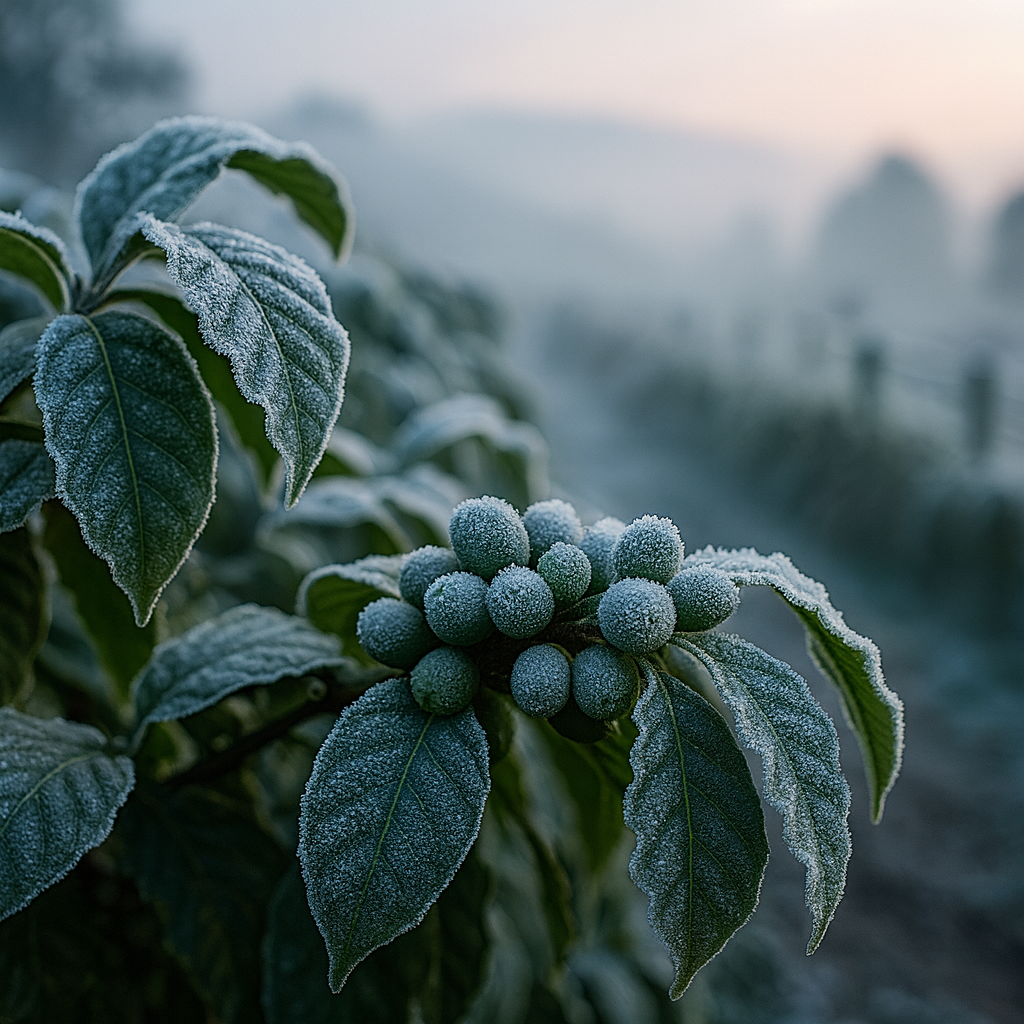
Brazil’s coffee market is on high alert after meteorological agencies warned of a possible frost episode expected to reach major producing regions in the coming days. The forecast triggered immediate reactions across global futures markets, with prices surging on concerns over potential supply disruptions.
According to weather specialists, a cold front advancing through southern and southeastern Brazil may cause temperatures to drop close to or below freezing in key coffee-growing states such as Minas Gerais, São Paulo and Paraná. If confirmed, the frost could damage coffee trees, especially younger plantations that are highly sensitive to sudden temperature drops.
Brazil remains the world’s largest coffee producer and exporter, accounting for more than one-third of global supply. Any weather-related threat to its harvest has direct and immediate repercussions on international prices, particularly in the Arabica segment traded on the New York Exchange.
Market analysts point out that even the risk of frost — without confirmed crop damage — is enough to trigger speculative movements and intensify volatility. “The coffee market reacts very sharply to climate signals in Brazil. A single frost event can compromise not only the current harvest but also future production cycles,” said a London-based commodities strategist.
Producers in vulnerable regions have activated emergency measures such as irrigation systems and crop protection practices in an attempt to mitigate possible losses. However, experts warn that such actions offer only partial protection against extreme cold events.
Beyond the weather risk, the global coffee market continues to be influenced by strong demand from Asia, currency fluctuations, and persistent logistical challenges affecting international supply chains. Combined, these factors are creating an environment of heightened uncertainty for traders and exporters.
If frost damage is confirmed over the coming days, analysts expect additional upward pressure on prices, potentially affecting contracts scheduled for delivery in 2026 and beyond.