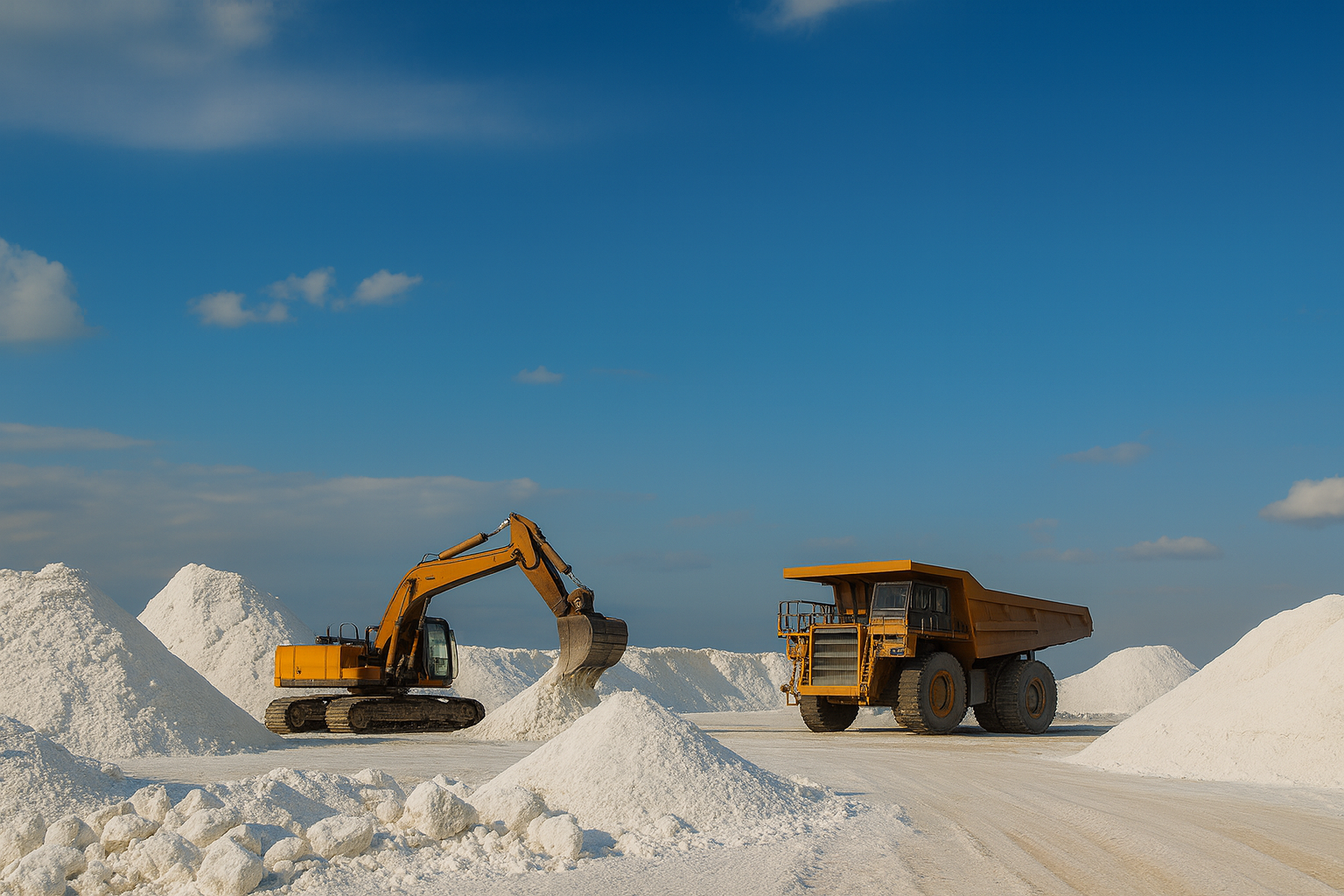
 Brasília – Brazilian lithium is rapidly consolidating its position as one of the country’s most strategic assets on the international stage, driven by the growing global demand for batteries, electric vehicles, energy storage, and clean technologies. Known as the “white gold” of the energy transition, lithium places Brazil among the most promising players in one of the most competitive markets of today.
With reserves mainly concentrated in the Jequitinhonha Valley, in the state of Minas Gerais, Brazil is emerging as one of the leading new lithium production hubs outside the traditional axis formed by Chile, Argentina, Bolivia, and Australia. The expansion of mining projects, combined with strong interest from international groups, has accelerated investments across the country.
According to industry analysts, global lithium demand is expected to more than triple by 2030, fueled by the rapid growth of electric vehicles and renewable energy systems. In this context, Brazil is increasingly viewed as a strategic and reliable supplier for markets in Asia, Europe, and North America.
Value Added and Industrial Development
Beyond extraction, Brazil is moving forward along the lithium value chain, with projects focused on refining, chemical processing, and even battery manufacturing. This strategy could transform the country from a raw material exporter into a technological hub for the energy transition, creating highly skilled jobs and strengthening the national industrial base.
Energy companies, automakers, and battery manufacturers are closely monitoring Brazilian projects, attracted by geological stability, legal security, and the growing environmental commitment of the sector.
Sustainability at the Center of the Debate
As lithium gains importance, attention to its environmental and social impacts is also increasing. Authorities and companies are reinforcing the need for sustainable practices, efficient water use, respect for local communities, and full production traceability—factors that have become essential for access to international markets.
The demand for “green lithium,” with a low carbon footprint and strong environmental responsibility, is now a key competitive advantage for Brazilian producers.
Growth Outlook
Projections indicate that Brazil could, in the coming years, significantly multiply its lithium production, expanding its share in international trade and strengthening its position on the map of the new energy economy.
For the country, lithium represents not only an economic opportunity, but also a strategic role in the global transition toward a cleaner energy matrix, placing Brazil among the leading players in one of the most important sectors of the 21st century.
Brasília – Brazilian lithium is rapidly consolidating its position as one of the country’s most strategic assets on the international stage, driven by the growing global demand for batteries, electric vehicles, energy storage, and clean technologies. Known as the “white gold” of the energy transition, lithium places Brazil among the most promising players in one of the most competitive markets of today.
With reserves mainly concentrated in the Jequitinhonha Valley, in the state of Minas Gerais, Brazil is emerging as one of the leading new lithium production hubs outside the traditional axis formed by Chile, Argentina, Bolivia, and Australia. The expansion of mining projects, combined with strong interest from international groups, has accelerated investments across the country.
According to industry analysts, global lithium demand is expected to more than triple by 2030, fueled by the rapid growth of electric vehicles and renewable energy systems. In this context, Brazil is increasingly viewed as a strategic and reliable supplier for markets in Asia, Europe, and North America.
Value Added and Industrial Development
Beyond extraction, Brazil is moving forward along the lithium value chain, with projects focused on refining, chemical processing, and even battery manufacturing. This strategy could transform the country from a raw material exporter into a technological hub for the energy transition, creating highly skilled jobs and strengthening the national industrial base.
Energy companies, automakers, and battery manufacturers are closely monitoring Brazilian projects, attracted by geological stability, legal security, and the growing environmental commitment of the sector.
Sustainability at the Center of the Debate
As lithium gains importance, attention to its environmental and social impacts is also increasing. Authorities and companies are reinforcing the need for sustainable practices, efficient water use, respect for local communities, and full production traceability—factors that have become essential for access to international markets.
The demand for “green lithium,” with a low carbon footprint and strong environmental responsibility, is now a key competitive advantage for Brazilian producers.
Growth Outlook
Projections indicate that Brazil could, in the coming years, significantly multiply its lithium production, expanding its share in international trade and strengthening its position on the map of the new energy economy.
For the country, lithium represents not only an economic opportunity, but also a strategic role in the global transition toward a cleaner energy matrix, placing Brazil among the leading players in one of the most important sectors of the 21st century.
Brasília – Brazilian lithium is rapidly consolidating its position as one of the country’s most strategic assets on the international stage, driven by the growing global demand for batteries, electric vehicles, energy storage, and clean technologies. Known as the “white gold” of the energy transition, lithium places Brazil among the most promising players in one of the most competitive markets of today.
With reserves mainly concentrated in the Jequitinhonha Valley, in the state of Minas Gerais, Brazil is emerging as one of the leading new lithium production hubs outside the traditional axis formed by Chile, Argentina, Bolivia, and Australia. The expansion of mining projects, combined with strong interest from international groups, has accelerated investments across the country.
According to industry analysts, global lithium demand is expected to more than triple by 2030, fueled by the rapid growth of electric vehicles and renewable energy systems. In this context, Brazil is increasingly viewed as a strategic and reliable supplier for markets in Asia, Europe, and North America.
Value Added and Industrial Development
Beyond extraction, Brazil is moving forward along the lithium value chain, with projects focused on refining, chemical processing, and even battery manufacturing. This strategy could transform the country from a raw material exporter into a technological hub for the energy transition, creating highly skilled jobs and strengthening the national industrial base.
Energy companies, automakers, and battery manufacturers are closely monitoring Brazilian projects, attracted by geological stability, legal security, and the growing environmental commitment of the sector.
Sustainability at the Center of the Debate
As lithium gains importance, attention to its environmental and social impacts is also increasing. Authorities and companies are reinforcing the need for sustainable practices, efficient water use, respect for local communities, and full production traceability—factors that have become essential for access to international markets.
The demand for “green lithium,” with a low carbon footprint and strong environmental responsibility, is now a key competitive advantage for Brazilian producers.
Growth Outlook
Projections indicate that Brazil could, in the coming years, significantly multiply its lithium production, expanding its share in international trade and strengthening its position on the map of the new energy economy.
For the country, lithium represents not only an economic opportunity, but also a strategic role in the global transition toward a cleaner energy matrix, placing Brazil among the leading players in one of the most important sectors of the 21st century.
Brasília – Brazilian lithium is rapidly consolidating its position as one of the country’s most strategic assets on the international stage, driven by the growing global demand for batteries, electric vehicles, energy storage, and clean technologies. Known as the “white gold” of the energy transition, lithium places Brazil among the most promising players in one of the most competitive markets of today.
With reserves mainly concentrated in the Jequitinhonha Valley, in the state of Minas Gerais, Brazil is emerging as one of the leading new lithium production hubs outside the traditional axis formed by Chile, Argentina, Bolivia, and Australia. The expansion of mining projects, combined with strong interest from international groups, has accelerated investments across the country.
According to industry analysts, global lithium demand is expected to more than triple by 2030, fueled by the rapid growth of electric vehicles and renewable energy systems. In this context, Brazil is increasingly viewed as a strategic and reliable supplier for markets in Asia, Europe, and North America.
Value Added and Industrial Development
Beyond extraction, Brazil is moving forward along the lithium value chain, with projects focused on refining, chemical processing, and even battery manufacturing. This strategy could transform the country from a raw material exporter into a technological hub for the energy transition, creating highly skilled jobs and strengthening the national industrial base.
Energy companies, automakers, and battery manufacturers are closely monitoring Brazilian projects, attracted by geological stability, legal security, and the growing environmental commitment of the sector.
Sustainability at the Center of the Debate
As lithium gains importance, attention to its environmental and social impacts is also increasing. Authorities and companies are reinforcing the need for sustainable practices, efficient water use, respect for local communities, and full production traceability—factors that have become essential for access to international markets.
The demand for “green lithium,” with a low carbon footprint and strong environmental responsibility, is now a key competitive advantage for Brazilian producers.
Growth Outlook
Projections indicate that Brazil could, in the coming years, significantly multiply its lithium production, expanding its share in international trade and strengthening its position on the map of the new energy economy.
For the country, lithium represents not only an economic opportunity, but also a strategic role in the global transition toward a cleaner energy matrix, placing Brazil among the leading players in one of the most important sectors of the 21st century.